
Have you ever noticed that your skin feels tight, rough, or dull even after applying moisturizer? You may assume you have dry skin, but the real issue could be dehydrated skin. Although these terms are often used interchangeably, they describe different skin concerns.
Understanding the difference between dehydrated skin and dry skin can help you choose a skincare routine that actually addresses what your skin needs.
What Is the Difference Between Dehydrated Skin and Dry Skin?
Dehydrated skin is a temporary condition caused by a lack of water in the skin, while dry skin is generally a skin type or condition associated with insufficient natural oils (lipids). Dehydrated skin can affect anyone, including people with oily, combination, or normal skin. It may make the skin feel tight, dull, or uncomfortable and can make fine lines appear more noticeable. Dry skin, on the other hand, often feels rough, flaky, itchy, or tight because the skin has difficulty maintaining its protective moisture barrier. Environmental conditions, harsh cleansing, aging, and some skin conditions can contribute to dryness. The American Academy of Dermatology notes that excessive dryness can involve significant moisture loss and may sometimes require professional evaluation.
What Is Dehydrated Skin?
Dehydrated skin means your skin is lacking water. It is not necessarily a permanent skin type. For example, someone with naturally oily skin can still experience dehydration.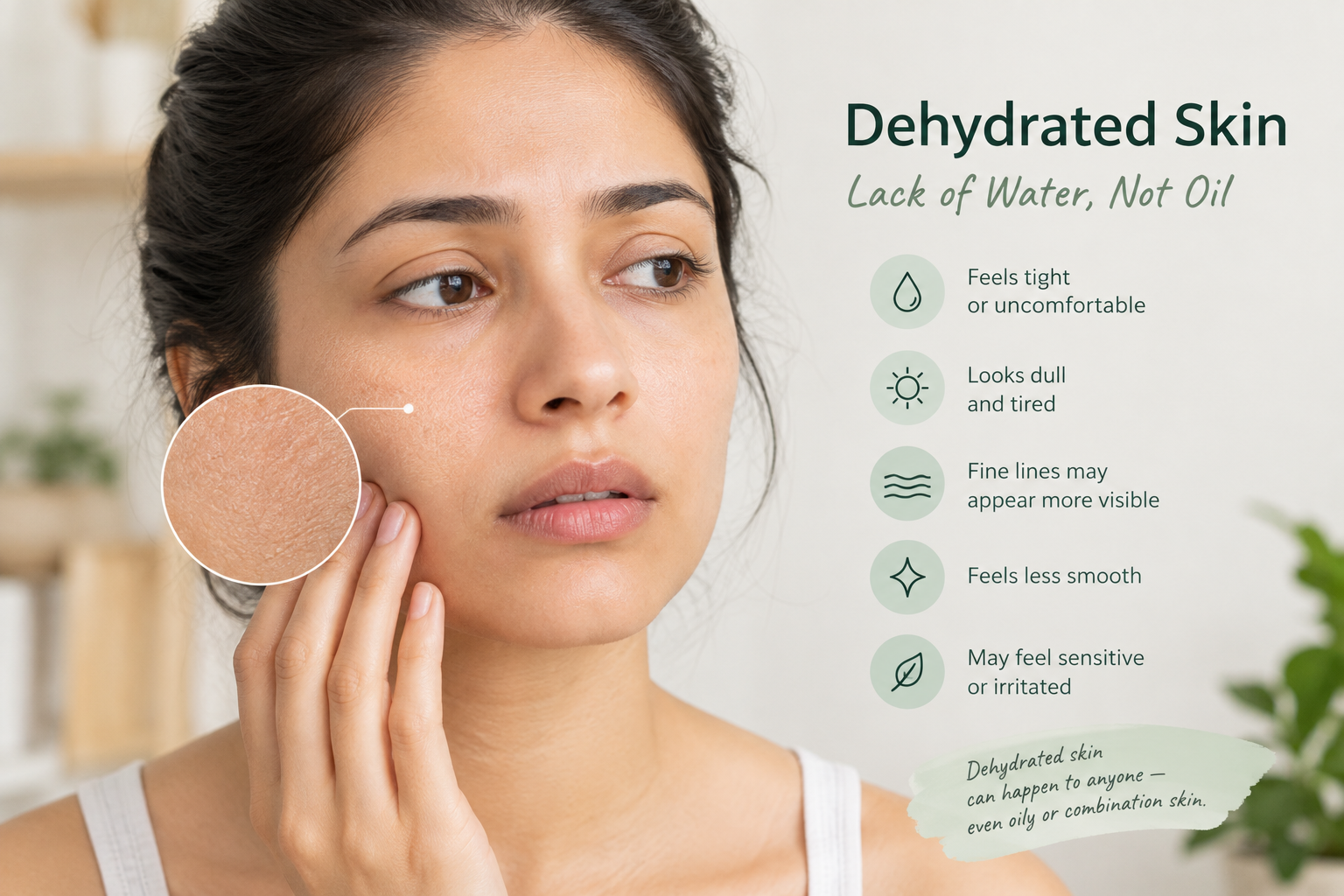
Common signs include:
- Tight or uncomfortable skin
- Dull-looking complexion
- Fine lines appearing more noticeable
- Skin that feels less smooth
- Increased sensitivity or irritation
- Makeup appearing uneven or patchy
Dehydration can be influenced by environmental conditions, cleansing habits, and factors that increase moisture loss from the skin.
Why Does Skin Become Dehydrated?
Skin can lose water when its moisture balance is disrupted. Dry air, excessive cleansing, hot water, and an impaired skin barrier can contribute to moisture loss. Moisturizers can help by increasing water content and reducing water loss from the skin.
What Is Dry Skin?
Dry skin is commonly described as skin that lacks sufficient oil or lipids and therefore does not retain moisture as effectively. Dermatology sources also use terms such as xerosis for dry skin.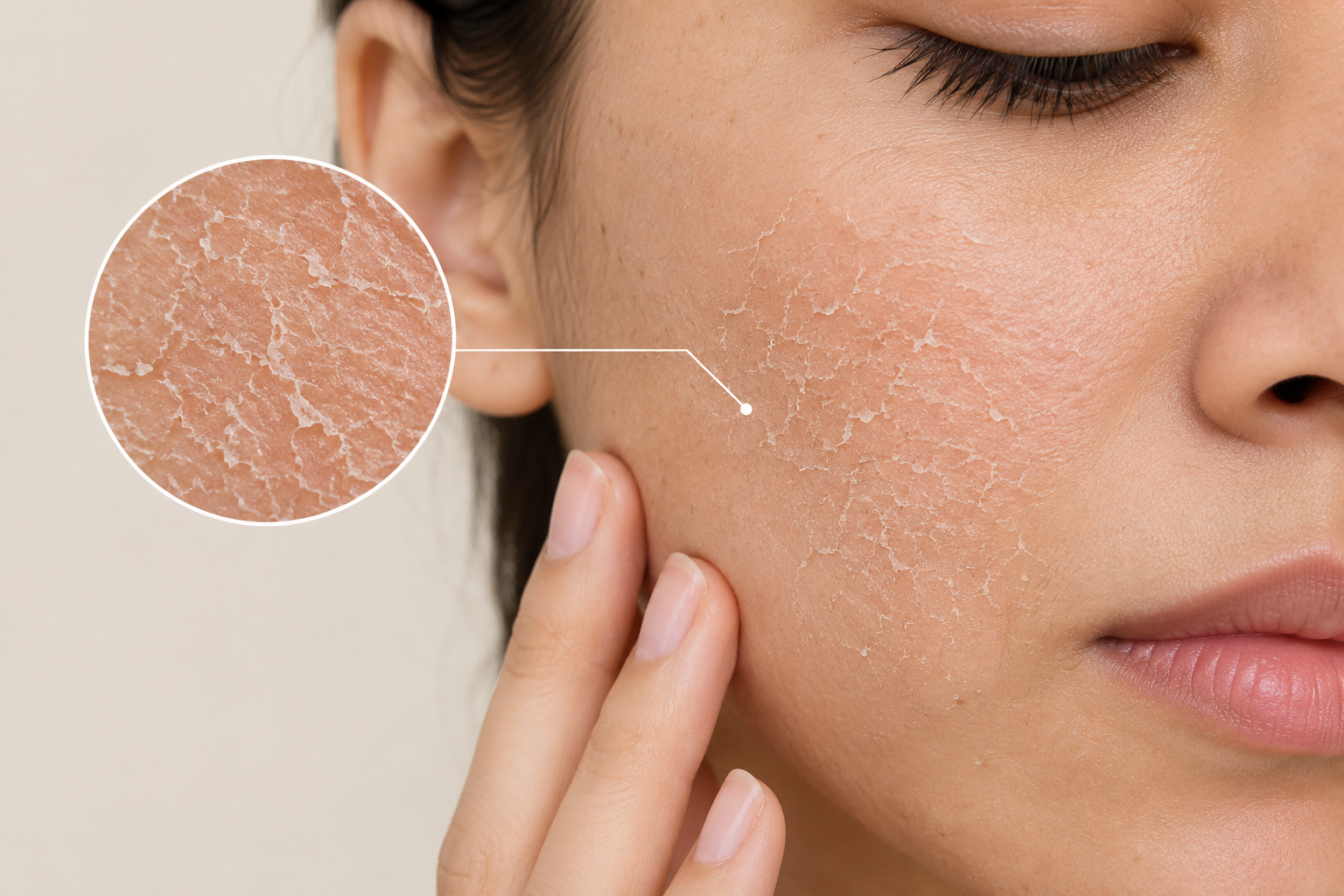
Dry skin may feel:
- Rough or tight
- Flaky or peeling
- Itchy
- Cracked
- Irritated
- Less soft and flexible
Cold or dry weather, long hot showers, harsh soaps, aging, certain medications, and some skin conditions can contribute to dry skin.
Is Dry Skin the Same as Dehydrated Skin?
No. The simplest way to remember the difference is:
Dehydrated skin = not enough water.
Dry skin = not enough natural oil/lipids.
However, both concerns can occur at the same time. Dry skin may also lose water more easily because its protective barrier is not functioning effectively.
How Can You Tell Which One You Have?
A simple way to understand your concern is to observe how your skin looks and feels.
If your skin suddenly feels tight or dull but you normally have oily or combination skin, dehydration may be involved. If your skin consistently feels rough, flaky, itchy, or tight, you may be experiencing dry skin.
However, symptoms can overlap, so appearance alone cannot always identify the exact cause.
What Should You Use for Dehydrated Skin?
For dehydrated skin, focus on hydration and reducing water loss.
Look for skincare products containing ingredients commonly used to support hydration, such as:
- Hyaluronic acid
- Glycerin
- Ceramides
- Other suitable humectants and moisturizing ingredients
Applying moisturizer to slightly damp skin can help retain water. The American Academy of Dermatology recommends moisturizing immediately after bathing or washing while the skin is still damp.
How Should You Care for Dry Skin?
Dry skin generally benefits from a gentle routine that supports the skin barrier. Following a simple morning skincare routine can help you keep your skin clean, hydrated, and comfortable throughout the day.
Use a gentle cleanser and choose a moisturizer appropriate for your skin type and level of dryness. Creams and ointments generally provide more moisture than lighter lotions, according to the American Academy of Dermatology.
Avoid unnecessarily harsh cleansing, very hot water, and excessive exfoliation, as these can make dryness worse. Learn more about common skincare mistakes to avoid for healthier, glowing skin. Fragrance-free products may also be preferable for dry or sensitive skin.
What Ingredients Can Support the Skin Barrier?
Moisturizers can contain different types of ingredients that work in different ways. Humectants attract water, emollients help smooth the skin, and occlusives help reduce water loss by forming a protective layer.
Ingredients such as glycerin, hyaluronic acid, ceramides, dimethicone, petrolatum, and shea butter are commonly found in moisturizing products. The right combination depends on your skin type and individual needs.
Quick Takeaway
If your skin lacks water, think dehydration. If your skin lacks oil and feels consistently dry or rough, think dryness. Both conditions can benefit from gentle cleansing, appropriate moisturizing, and protecting the skin barrier.
Dehydrated Skin vs. Dry Skin: Quick Comparison
| Feature | Dehydrated Skin | Dry Skin |
|---|---|---|
| Main issue | Lack of water | Lack of natural oils/lipids |
| Usually a | Temporary condition | Skin type or ongoing condition |
| Can affect oily skin? | Yes | Less commonly described this way |
| Common signs | Dullness, tightness, visible fine lines | Roughness, flakes, itching, tightness |
| Main skincare focus | Hydration + reducing water loss | Moisture + barrier support |
Frequently Asked Questions
1. Can oily skin be dehydrated?
Yes. Oily skin can still lack water. Dehydration describes the skin’s water content, not how much oil it produces.
2. How do I know if my skin is dry or dehydrated?
Dryness is often associated with persistent roughness, flaking, itching, and tightness. Dehydration may appear as temporary tightness, dullness, or more noticeable fine lines. Because the symptoms overlap, persistent problems may need professional evaluation.
3. Can dry skin also be dehydrated?
Yes. Dry skin can also lose water easily, particularly when the skin barrier is compromised.
4. What is better for dehydrated skin: moisturizer or hydration?
You may need both. Hydrating ingredients can help increase water content, while moisturizers can help maintain hydration and reduce water loss.
5. Should I exfoliate dehydrated or dry skin?
Be cautious with exfoliation when your skin is dry, irritated, or uncomfortable. Excessive exfoliation can further disturb the skin barrier. Focus first on gentle cleansing and moisturizing.
6. When should I see a dermatologist?
If dryness continues despite appropriate skincare, becomes painful, cracks or bleeds, or is accompanied by significant irritation, a dermatologist can help identify the cause. Persistent excessive dryness can sometimes be associated with an underlying skin condition or medication.
Conclusion
Dehydrated skin and dry skin may look similar, but they are not exactly the same. Dehydrated skin lacks water, while dry skin is associated with insufficient natural oils and difficulty maintaining moisture.
The key is to understand what your skin is asking for. For more practical skincare tips, explore our simple guide to healthy, radiant skin. A gentle cleanser, suitable moisturizer, hydration-supporting ingredients, and consistent skin-barrier care can help maintain healthier-looking skin.
If your skin remains excessively dry, irritated, cracked, or uncomfortable, professional advice can help determine the underlying cause and the most appropriate care.